Author: The Editor

  • Do I Actually Need More Friends — Or Just More People to Do Things With?

    Do I Actually Need More Friends — Or Just More People to Do Things With?

    I don’t particularly need another person I can call at 3am.

    I’m lucky enough to already have people for that. People who know the history, know the context and know enough about me that I don’t have to begin every story somewhere around 2009 just to explain why the thing that happened on Tuesday is significant.

    What I could occasionally use is someone who’s free at 7pm on Thursday.

    And I’m starting to think those might be two entirely different problems.

    Because it’s possible to have good friends, genuinely good friends, and still sometimes have nobody to do anything with.

    Your friends haven’t disappeared and you haven’t fallen out. Life has just become considerably more complicated than it used to be. The friend you once called at five to see if she fancied dinner might now need three weeks’ notice. Someone else has moved an hour away, another has children, and finding a time when two people’s calendars happen to line up can feel like an achievement in itself.

    They’d still turn up if you really needed them.

    Getting them to turn up for a glass of wine is another matter.

    And when that starts happening, it’s easy to think: I need more friends.

    I’m not sure we always do.

    Maybe friendship is doing too many jobs

    There’s a strange hierarchy to adult relationships. We understand what a close friend is, and we understand what a stranger is, but everything in between can feel slightly harder to define.

    There’s the former colleague you still occasionally meet for dinner. The woman from the exercise class you always end up talking to. Someone you know through another friend and genuinely like, although neither of you has ever quite crossed whatever invisible line turns knowing somebody into being their friend.

    We even tend to describe these relationships apologetically.

    “We’re not really friends, but…”

    I’m beginning to wonder why the but is necessary.

    Perhaps you’re not close friends. Perhaps you just really enjoy going to the cinema together. That still seems like a perfectly worthwhile relationship to have.

    Researchers tend to call people in this wider circle “weak ties”, which sounds rather like a criticism. But the research on them is surprisingly positive. Studies have found a relationship between these everyday interactions and greater happiness and feelings of belonging. One study that followed more than 800 adults aged 40 and over also found that having a larger network of weaker ties predicted positive changes in emotional wellbeing over time.

    So perhaps these aren’t lesser relationships after all. They may simply be doing a different job from our closest friendships.

    The interesting part is that we often seem to treat these relationships as unfinished. If we like somebody, there can be an assumption that the relationship should progress until, eventually, we become proper friends.

    But perhaps becoming close isn’t the only successful outcome.

    The person you meet for a walk twice a month might remain the person you meet for a walk twice a month. You might still really look forward to those walks.

    That doesn’t make the relationship a failed friendship. Maybe it was never trying to become one.

    Having friends and having a social life aren’t quite the same thing

    I think this distinction becomes more noticeable as we get older because emotional closeness and practical availability begin drifting apart.

    Someone can be one of the most important people in your life and still not be the person who’s available when you decide you’d like to see a film tomorrow.

    That sounds incredibly obvious written down. I’m not convinced I’ve always treated it as obvious.

    If the people I’m closest to aren’t available, my instinct has generally been either to wait until they are or do the thing alone. Asking somebody I know less well can somehow feel strangely significant, as though inviting someone to see a film requires me to first decide whether this person qualifies as a Friend.

    It really doesn’t.

    And maybe that’s the part worth reconsidering.

    Instead of deciding that somebody needs to become a proper friend before we start including them in our lives, perhaps sometimes we can simply ask.

    There’s something quite freeing about that. It removes the strange pressure from new adult relationships to become something more than they currently are.

    You can enjoy somebody’s company without knowing where the relationship is going.

    In fact, it doesn’t have to be going anywhere.

    Maybe “more friends” isn’t actually the goal

    None of this makes close friendship less important. Having people who really know you is one of the best things life can give you.

    But perhaps we’ve become too accustomed to expecting those same people to provide most of our social lives as well as our emotional ones.

    When they become less available, the obvious response can be to wait for a gap in their calendars or conclude that we need to make more close friends.

    There is another possibility.

    We could get better at valuing the relationships that sit somewhere in between.

    Maybe occasionally you ask the former colleague you like seeing, or the person you always talk to after a class, if they fancy doing something instead of automatically scrolling through the same few names in your phone.

    Some of those relationships might eventually become close friendships. Others won’t.

    That isn’t necessarily a failure.

    I think I’ve spent a long time assuming that if I wanted a fuller social life, I needed to make more friends. The more I think about it, the less convinced I am.

    I’m fortunate enough to have people I could call at 3am.

    Maybe what I need is to get a little better at valuing the people I could call at 7pm on Thursday.

    Those people count too.

  • Why Is Looking for a Job Harder When You’re More Qualified Than You’ve Ever Been?

    Why Is Looking for a Job Harder When You’re More Qualified Than You’ve Ever Been?

    The last time I was properly looking for work, I didn’t have much experience.

    I knew this because employers had a habit of mentioning it.

    So I did what people without much experience do. I talked about being a quick learner. I promised enthusiasm. I tried to convince someone that although I hadn’t done the job before, I was perfectly capable of learning how to do it.

    Eventually, someone believed me.

    More than a decade later, I found myself looking for work again. This time, things were different.

    I had education. I had years of professional experience. I had industry knowledge. I had transferable skills. For the first time in my working life, I could apply for jobs without having to construct an elaborate argument for why my lack of experience shouldn’t matter.

    I thought this would make things easier.

    It has not.

    When I took voluntary redundancy, my plan was to spend perhaps a month casually applying for jobs I actually wanted. I wasn’t expecting employers to fight over me in the car park. I just didn’t think I’d have too much difficulty finding something if I stayed within my industry, moved into something adjacent to it or found a role where my experience transferred reasonably well.

    Several months later, I’m still looking.

    Apparently, getting all the experience was only part of the assignment.

    Applying for jobs is now a job

    If you haven’t looked for work in a long time, it’s easy to forget how much work is involved in asking someone to let you work for them.

    You find the job, read the description, research the company, adjust your CV and write whatever version of a cover letter or supporting statement is required. Then you upload your CV and, surprisingly often, spend another chunk of time entering much of the same information into an application form involving dropdown menus, separate employment histories and boxes that don’t quite correspond with anything on the CV you’ve just uploaded.

    Eventually, you submit it. Then you wait for the application window to close, and often wait some more. Sometimes you hear nothing. Sometimes, weeks later, an email arrives to tell you that unfortunately you have not been successful on this occasion.

    And sometimes that’s completely understandable.

    There will always be people with stronger applications, more relevant experience or whatever particular thing an employer happens to be looking for.

    The ones that are harder to understand are the jobs where you read the description and think: I have literally done this.

    Not something similar to this.

    This.

    And you still don’t get an interview.

    That’s when the confidence you brought into the whole process starts developing some questions of its own.

    Because what exactly were all those years of experience supposed to solve?

    Being good at a job and being good at getting one are different things

    There is some evidence that this isn’t an entirely personal failure of job-searching ability.

    Research looking specifically at mid-career workers moving into career transition after voluntary redundancy found that people who had spent years in stable employment could struggle with evaluating and communicating their employability. They had experience, but suddenly had to work out how to package that experience for a new labour market.

    Which makes sense when you think about it.

    For more than ten years, my job was to do my job.

    I wasn’t simultaneously practising how to apply for it.

    I wasn’t regularly explaining my transferable skills to strangers, turning my working life into concise examples or keeping myself match-fit for interviews. There was no reason to.

    Staying successfully employed for years can leave you remarkably out of practice at getting employed.

    And then, if you do get through the application stage, you discover there is another skill you haven’t been practising.

    Job interviews.

    Apparently I need a better answer than “I’d just deal with it”

    My memory of interviews from earlier in my working life is fairly straightforward.

    There are targets. Are you okay with targets?

    Yes.

    Sometimes work is stressful. Are you okay with that?

    Yes.

    Will you work hard?

    Yes.

    Wonderful. We understand each other.

    The questions I’m encountering now require considerably more self-reflection.

    What would you do if you felt a colleague on the same salary wasn’t contributing as much as you?

    How would you handle a situation where you believed your manager had set unrealistic targets?

    My instinctive answer to questions like these tends to be some variation of:

    I’d just deal with it.

    It turns out this is not the answer they’re looking for.

    Modern structured interviews commonly use behavioural and situational questions to assess things like judgement, communication, problem-solving and how someone has handled—or would handle—particular situations at work.

    There is evidence behind the approach. More structured interviews generally give employers a more consistent way to compare candidates, and behavioural and situational questions can help predict how someone might perform in a role.

    I understand the logic.

    Unfortunately, understanding the logic doesn’t make me immediately brilliant at answering them.

    Because there are situations I have dealt with perfectly adequately in real life that I would struggle to transform, on demand, into a polished two-minute story demonstrating conflict resolution, stakeholder management and personal growth.

    Apparently doing the job and interviewing for the job are two different professional skills.

    I’m currently more experienced in one than the other.

    Then you start wondering why

    Not getting a job is one thing.

    Not getting an interview for a job you’re genuinely qualified to do can mess with your head in a slightly different way.

    You start trying to reverse-engineer a decision made by people you’ve never met using information you don’t have.

    Maybe there were 200 applicants.

    Maybe somebody had exactly the niche experience they wanted.

    Maybe my application wasn’t as good as I thought it was.

    Maybe I have ten years of habits from one industry and they wanted somebody with a different background.

    Maybe they looked at the dates on my education and employment history and made assumptions about my age.

    That last possibility is uncomfortable because age discrimination in recruitment isn’t imaginary.

    Research reviewed by the OECD has repeatedly found that older applicants can receive fewer interview invitations than otherwise comparable younger candidates, with evidence of particularly strong employer bias against older women.

    That does not mean age explains why I didn’t get a particular interview.

    I have no idea why I didn’t get a particular interview.

    And that’s really the problem.

    A rejection email rarely arrives with a detailed explanation of the alternative universe in which you got the job.

    It just says they’ve decided not to progress your application.

    So you’re left with the least useful recruitment feedback imaginable:

    No.

    There is also a wider labour market around any individual job search. In Ireland, unemployment was higher in the second quarter of 2026 than it had been a year earlier, with the number of unemployed people increasing to 151,000. The female unemployment rate had also risen over that period.

    Again, that doesn’t explain an individual rejection.

    It does mean there are more people looking for work.

    Sometimes you wonder what you’re doing wrong when the answer may be that you’re not doing anything particularly wrong at all.

    There may simply be someone else.

    Meanwhile, the definition of “a job I’d take” starts moving

    When I first finished work, I wasn’t particularly interested in applying for absolutely anything.

    That wasn’t because I thought certain jobs were beneath me or because I’d become terribly attached to an impressive job title.

    My life simply costs more now than it did the last time I was looking for work.

    Years ago, I expected minimum wage. Anything above it was a bonus.

    Now, taking a sufficiently large drop in salary could mean needing a second job to supplement the first one.

    And salary isn’t the only thing that changed.

    My previous job came with a pension, paid sick leave and income protection. Over the years, I became quite attached to these things.

    Funny that.

    At first, those benefits were part of what I was looking for in another job.

    Then time passed.

    And unemployment has a rather effective way of changing the comparison.

    A salary that initially looked too low starts looking considerably better when compared with no salary at all.

    A job without the benefits you’ve become used to starts looking like something you could take for now and sort out later.

    The question quietly changes from:

    Is this the right next job for me?

    to:

    Could this be a perfectly good job for now?

    I don’t think that’s necessarily the same thing as lowering your standards.

    Sometimes it’s acknowledging that the job you take next doesn’t have to be the job you keep for the next ten years.

    Which is another thing I had perhaps forgotten after being in one place for so long.

    Maybe “starting again” isn’t quite right

    Career advice loves a reinvention.

    Start again at 40. Change your life at 50. Follow your passion. Begin your exciting second act.

    Maybe that’s what some people are doing.

    I’m not sure it’s what I’m doing.

    I didn’t leave my job with a secret ambition to retrain as an architect or open a pottery studio in Tuscany.

    I took voluntary redundancy believing that the experience I’d accumulated would help me find whatever came next.

    It still might.

    I don’t know yet.

    There is also a possibility that leaving will eventually result in me earning more than I did before. Staying with one employer for a long time can make it difficult to know exactly what your experience is worth elsewhere until you actually test the market.

    Or I might take something for less money because right now having an income matters more.

    Both things can be true.

    What I don’t think is true is that I’m back where I started.

    The years in between still happened.

    I still have the qualifications I didn’t have before. I still have the experience. I still know how to work. A few rejection emails—or quite a lot of them—haven’t removed any of that.

    What I don’t yet have is the next job.

    So, for the moment, I’m learning a different set of skills.

    How to apply for jobs again.

    How to interview for them again.

    How to answer a question about unrealistic targets without saying, Well, presumably I’d just have to get on with it.

    How to decide what I need from a job, what I’d like from one and what I’m prepared to compromise on for now.

    Perhaps that’s the part of starting again that doesn’t fit particularly well into the inspirational career-change stories.

    Sometimes you don’t leap dramatically from one successful chapter into another.

    Sometimes there’s an awkward bit in the middle where you upload your CV and then spend 25 minutes typing your CV into boxes.

    For now, I’m still in the awkward bit in the middle.

    Sources / Further Reading

    OECD — OECD Employment Outlook 2025: Can We Get Through the Demographic Crunch?
    International evidence on employment at older ages, including research on age discrimination in recruitment and the particular barriers experienced by older women.

    Where to from here? Evaluating employability during career transition — Journal of Management & Organization
    Research examining mid-career workers who entered career transition following voluntary redundancy and how they evaluated and communicated their employability.

    U.S. Office of Personnel Management — Structured Interviews
    Evidence and guidance on structured employment interviews, including behavioural and situational questions and their use in assessing job-related competencies.

    Central Statistics Office Ireland — Labour Force Survey Quarter 2 2026
    Official Irish labour-market data, including changes in unemployment and unemployment rates during 2026.

  • Why Is Cooking for One So Annoying?

    Why Is Cooking for One So Annoying?

    Cooking for one should be the easiest version of cooking.

    One person. One appetite. No children announcing that the food they happily ate last Tuesday is now disgusting. No negotiating over mushrooms. No making three slightly different versions of the same dinner because apparently sauce touching rice is a problem.

    And yet cooking for one is weirdly difficult.

    Not technically difficult. I am capable of dividing a recipe by four. It’s everything around the cooking that doesn’t divide quite so neatly.

    The loaf of bread. The bag of salad. The bunch of herbs you needed approximately six leaves from. The packet that says “serves four” as though you’ve invited three people over and forgotten about them.

    Cooking for one isn’t really one problem. It’s shopping for one, storing for one, portioning for one and somehow getting through everything you bought before it starts developing its own ecosystem.

    And it turns out this isn’t just poor fridge management.

    Food isn’t really sold for one

    A lot of the food we buy still assumes there is somebody else at home.

    Recipes are routinely written for several people. Pack sizes are designed around households. Offers reward buying more. The larger version is often considerably better value per gram than the smaller one.

    Which creates one of the stranger calculations of shopping for one: do I buy the amount I actually need, or the amount that makes financial sense?

    Bread is possibly the perfect example.

    At the time of writing, Tesco Ireland was selling a 390g Brennan’s half loaf for €1.79. An 800g loaf from the same brand’s Super Bread range was €2.29. They’re not identical products, so it isn’t a perfect price comparison, but they illustrate the problem rather beautifully.

    For another 50 cent, you can have roughly twice as much bread.

    Excellent value. Assuming you need twice as much bread.

    If you don’t, your choices are to pay considerably more per kilo for the smaller loaf, buy the larger one and become unexpectedly committed to toast, freeze half of it, or watch several slices slowly become building materials.

    And bread is hardly alone. Fresh herbs seem to be sold exclusively to people opening a restaurant. Salad has an extraordinarily brief period between I should eat more salad and what is that liquid at the bottom of the bag? A recipe asks for half a pepper, a spoonful of crème fraîche or 100ml of something sold in a 500ml container.

    None of these is a catastrophe. That’s partly why it’s so annoying. It’s just a constant low-level logistical problem created by having one mouth instead of several.

    And yes, we really do waste more

    There is evidence that smaller households have a harder time with this.

    Research across different countries has found that people living alone can waste more food per person than those in larger households. A 2026 European meta-analysis found household structure had a measurable relationship with food waste and pointed to UK evidence that single-person households produce more waste per person, often because food isn’t eaten before it goes off.

    A 2024 Finnish study found the same pattern. The 165 one-person households in the study generated significantly more avoidable food waste per person than two-, three- and four-person households. They also got through more food packaging per person.

    More recent research into food waste and packaging suggests why buying the “right” amount isn’t necessarily straightforward. Single-person households are particularly vulnerable to the trade-off between buying larger quantities that may not get eaten and buying smaller, packaged portions that come with their own financial and environmental costs.

    In other words, sometimes the sensible choice isn’t particularly obvious.

    Ireland has also produced one statistic that feels almost suspiciously relevant to my kitchen: in 2026, 48% of people surveyed by the Environmental Protection Agency said bread was the food they threw away most often.

    Of course it’s bread.

    Somewhere, a half loaf is feeling vindicated.

    The solution is always apparently “meal planning”

    Advice about cooking for one tends to assume that the problem can be defeated with sufficient organisation.

    Plan your meals. Write a shopping list. Batch cook. Freeze individual portions. Use your leftovers creatively.

    All of which works. It is also how your freezer ends up containing eleven anonymous containers which you were absolutely certain you would recognise later.

    Batch cooking is probably one of the most sensible answers to cooking for one. Make four portions, eat one and freeze three. Future You gets a homemade dinner with almost no effort.

    Future You should be delighted.

    Unfortunately, Future You occasionally turns out to be an ungrateful cow who doesn’t want chilli again.

    That’s the bit meal plans can’t entirely solve. Food isn’t just fuel that can be allocated efficiently across seven boxes marked Monday to Sunday. You can plan lentil curry for Thursday and reach Thursday with absolutely no interest in lentil curry.

    Plans change. Someone asks you out for dinner. You work late. You aren’t hungry. You are hungrier than expected. The avocado goes directly from masonry to compost without passing through the edible stage.

    The more people in a household, the more opportunities there are for someone to eat the thing that needs eating.

    When there is only one of you, that’s your job.

    Again.

    Then there’s the effort-to-dinner ratio

    Some meals make perfect sense for one. Eggs. Pasta. A stir-fry. Things that can go from vague intention to plate without requiring project management.

    Others feel slightly absurd.

    There is something difficult to justify about spending hours preparing a meal that will take one person eight minutes to eat. Slow cooking something for four hours so that five people can demolish it in ten minutes is bad enough. When the entire audience for those four hours of culinary effort is you, the effort-to-applause ratio becomes considerably worse.

    This may be why “cooking for one” advice so often becomes “cook for four anyway.”

    Which brings us back to the freezer.

    Perhaps the problem isn’t that we’re bad at this

    There is a temptation to make food waste a personal failing. If we’d planned better, stored things better, frozen things sooner and remembered the half an onion behind the yoghurt, none of this would have happened.

    Some of it wouldn’t.

    But there is a structural problem too. Food packaging, recipe quantities and supermarket economics don’t always shrink neatly to fit a household of one. Even official guidance on reducing food waste has recognised the need for portion and package sizes that work for different household sizes.

    That leaves people cooking for one with a slightly ridiculous set of choices.

    Buying more can be cheaper. Buying less can mean paying more per gram. Buying fresh means using it quickly. Buying frozen solves some of the problem, but eventually your freezer starts exercising an unreasonable amount of editorial control over what you’re having for dinner.

    There isn’t always a perfectly efficient choice.

    And perhaps that’s worth remembering the next time you find yourself throwing away half a bag of something you genuinely intended to eat.

    What actually makes it easier?

    The boring answers are, unfortunately, mostly the right ones.

    Freezing bread works. Buying loose fruit and vegetables helps when they’re available. Ingredients that can become several genuinely different meals are easier to get through than something bought for one specific recipe. Freezing extra portions while you still like the food is considerably more successful than doing it on day four when you never want to see it again.

    But perhaps the most useful adjustment is to stop assuming that the larger pack is automatically better value.

    The cheapest price per kilo isn’t cheaper if part of the kilo ends up in the bin. That’s a surprisingly difficult habit to break because we’ve been trained to recognise the bigger pack as the bargain.

    Sometimes it is.

    Sometimes you’re just buying your bin dinner.

    Cooking for one has advantages. You can eat exactly what you want, when you want it. Nobody complains about the mushrooms. Nobody asks what’s for dinner while you’re visibly making dinner.

    But it requires a peculiar amount of planning for something involving only one person.

    You buy the food. You cook the food. You eat the food.

    And occasionally you pay someone to take away the bit you couldn’t get to in time.

    Still, there is always another solution.

    Get a dog.

    Sources / Further Reading

    Houlihan & Williams — Food Waste in European Households: A Meta-Analysis of Behavioural Drivers and Quantitative Trends
    2026 meta-analysis examining household food waste across Europe, including the relationship between household composition and waste per person.

    Närvä, Alarinta & Wirtanen — The Amount of Food Waste and Food Packages Generated in Various-Sized Households
    2024 study comparing food and packaging waste across different household sizes, including one-person households.

    Avoidable Food Waste and Household Size: A Life Cycle Comparison of Packaged and Unpackaged Fruits and Vegetables
    2025 research examining the trade-off between packaging and food waste and the particular challenges facing single-person households.

    Environmental Protection Agency — Bread Is the Food Thrown Out Most Often at Home
    2026 Irish research into household food-waste habits, including bread waste and freezing behaviour.

    Oklahoma State University Extension — Cooking for One or Two
    2026 guidance addressing the practical difficulties created by recipes and food packages designed for larger households.

  • Excuse Me, the 1990s Are Not Vintage

    Excuse Me, the 1990s Are Not Vintage

    There comes a moment in adult life for which nobody adequately prepares you.

    Something you remember buying new becomes vintage.

    Not vintage-inspired.

    Not retro.

    Actual vintage.

    You see a jacket, a handbag, a piece of furniture or some piece of technology described as a vintage 90s find, and your immediate reaction is:

    No.

    Vintage is old.

    The 90s were only…

    And this is usually the point at which it’s best not to finish the calculation.

    Because unfortunately, the 90s are vintage.

    I don’t like it either.

    I remember when this happened the first time

    When I was younger, my mother would occasionally see something that was fashionable and tell me she’d worn the same thing years before.

    Fashion comes back around. Everybody knows this.

    At the time, though, I was experiencing the new version. Whatever I was wearing wasn’t retro to me. It was just what was in the shops.

    Then enough time passed for fashions I remembered the first time to start coming back again.

    What’s even more alarming is that we’ve now been doing this for long enough that some people are seeing fashions from their youth come back for the second time.

    They wore something when it was fashionable. Watched another generation revive it years later. And now here it comes again.

    At some point I’m not sure we can keep calling this a comeback.

    It’s doing laps.

    Nostalgia is now a genuine force in retail. Circana reported in 2026 that it’s influencing spending across multiple categories, including among younger shoppers buying into periods they didn’t necessarily experience themselves. YouGov has found the 90s particularly fashionable among Gen Z.

    Which is lovely.

    I’m glad everyone had a meeting and decided our old clothes were good after all.

    I just wish we’d been informed before we threw them away.

    Some things can come back. We need to discuss the jeans.

    Fashion revivals are selective, of course.

    Sometimes something comes back and you wonder why we ever stopped wearing it.

    Sometimes you see it and think, Oh yes. I remember those.

    And occasionally something reappears that makes you realise society has failed to preserve an important historical lesson.

    Low-rise jeans, for example.

    I’m not objecting to low-rise jeans in general.

    I’m talking about the ridiculously low ones.

    People who weren’t there may not fully appreciate how committed we became to lowering a waistband. There was a period when jeans seemed to be engaged in a competition to see how far down they could go while still technically qualifying as trousers.

    Every year, another inch disappeared.

    Eventually there was nowhere left to go.

    Those can stay in the past. We pushed that particular experiment far enough.

    It isn’t just the clothes

    Perhaps clothes coming back shouldn’t feel particularly strange. Fashion has always recycled itself.

    It’s when ordinary objects from your life start acquiring words like vintage, retro and collectible that things become more unsettling.

    CDs, for example.

    There are people buying CDs because they like physical media. Vinyl has been back for years. Film photography has become desirable again. Digital cameras from the 2000s have found enthusiastic new audiences.

    The digital camera one is particularly difficult to process.

    Because some of us remember when the digital camera was the thing replacing the old technology.

    It was modern.

    It was exciting.

    You could take a photograph and see it immediately.

    No film. No waiting. No picking up an envelope of photographs several days later and discovering that someone’s eyes were closed in the only picture you took.

    And now old digital cameras themselves can be retro.

    Apparently technology can become obsolete, survive the embarrassment and eventually emerge from the other side as interesting again.

    This suggests we should probably stop throwing anything away.

    That drawer full of unidentified cables may yet fund your retirement.

    The maths is extremely unhelpful

    There’s a fact about all this that I would strongly recommend not thinking about.

    In 1986, 1946 was forty years earlier.

    In 2026, 1986 is forty years earlier.

    I understand the arithmetic.

    I reject the conclusion.

    Because mentally those two distances do not feel remotely equivalent.

    Looking back from the 80s to the 1940s felt like looking back into history.

    The clothes were old. The cars were old. The photographs looked old. The world seemed visibly different.

    The 1940s could comfortably be described as vintage without causing any emotional difficulty whatsoever.

    The 80s?

    That’s different.

    I remember the 80s.

    Of course, to someone young enough, anything beginning with 19 probably looks historical.

    I understand their position.

    I don’t care for it.

    Apparently, somewhere in my head, vintage has always meant from before I can remember.

    This worked perfectly well until vintage caught up with me.

    Nobody tells you this when you’re young. You assume old things will remain conveniently behind you while you continue occupying the present.

    Then one day the present moves on without consulting you and puts a price tag on something you remember buying new.

    Vintage.

    Excuse me?

    It’s only going to get worse

    The really unfortunate part is that the nostalgia cycle isn’t stopping at the 90s.

    We’ve already had enormous interest in Y2K fashion and culture, and fashion coverage has begun discussing a revival of the 2010s.

    The 2010s.

    I had just about accepted that the 90s were vintage when somebody announced that the 2010s were coming back.

    Absolutely not.

    Some of my things from the 2010s haven’t even broken yet.

    Perhaps this is simply what happens once you’ve accumulated enough decades. You stop experiencing fashion and culture as a straight line and start recognising things as they come back around.

    The first time, it’s new.

    The second time, it’s a revival.

    By the third time, presumably you just nod.

    Oh, we’re doing this again.

    And there is something quite nice about younger people finding things from another generation and deciding they’re worth having. They don’t have to remember the first version to enjoy the next one.

    I’m trying to be mature about it.

    The 90s are vintage.

    Fine.

    The clothes can come back. The CDs can come back. The cameras can come back. Apparently some of the furniture is coming back too.

    I’ll accept all of it.

    But those extremely low-rise jeans can remain exactly where we left them.

    We’ve already done our time.

    Sources / Further Reading

    Circana — Yesterday’s News, Today’s Trends: How Nostalgia Is a Multi-Category Driver. Research on nostalgia influencing consumer purchases across categories and generations, including younger consumers buying into eras they did not personally experience.

    YouGov — Gen Z Says the ’90s Were Peak Style. Survey research examining attitudes toward fashion decades, with the 90s particularly popular among Gen Z respondents.

    Vogue — Why Fashion Still Loves the ’90s. Discussion of the continuing influence of 90s nostalgia and fashion rather than its disappearing after a single trend cycle.

    The RealReal — 2026 Resale Report. Resale-market evidence on younger consumers, vintage fashion and what the company describes as “new nostalgia.”

    Vogue — Are We Officially Entering a 2010s Revival? Coverage of fashion’s nostalgia cycle beginning to revisit styles from the 2010s.

  • It’s Only $5.99 a Month. And So Is Everything Else.

    It’s Only $5.99 a Month. And So Is Everything Else.

    $5.99 is not a lot of money.

    This is what makes $5.99 dangerous.

    Nobody sits at the kitchen table with a calculator and says, I’m going to need some time to think about this $5.99 commitment.

    You press Subscribe.

    And why wouldn’t you? It’s $5.99.

    The problem is that $5.99 has friends.

    There’s the $8.99. The $11.99. The extremely reasonable $3.49. The $6.99 you signed up for because there was something you wanted to watch. The $2.99 for extra storage because your phone informed you, with some urgency, that you had apparently taken too many photographs since 2017.

    Individually, none of these amounts seems particularly concerning.

    Collectively, at some point, you appear to have acquired a small portfolio of monthly financial commitments.

    And the strange thing is that most of them probably seemed like a perfectly good idea at the time.

    We weren’t supposed to need this many

    Streaming was going to make everything simpler.

    Remember that?

    Instead of paying for an enormous television package containing 147 channels you never watched, you could simply subscribe to the things you actually wanted.

    Brilliant.

    Except the things you actually wanted turned out to live in different places.

    The series everyone is talking about is on one service. The film you want is on another. That programme you used to watch has moved somewhere else. Somebody recommends a documentary and, naturally, that requires an entirely new relationship with another company.

    So you subscribe.

    Then you finish the documentary.

    The subscription, however, does not consider its work complete.

    Deloitte’s 2026 US research found that subscribing households were spending an average of $69 a month on streaming video services. Nearly three-quarters of consumers surveyed said they were frustrated by streaming services continuing to put their prices up.

    Which perhaps explains a modern viewing habit that would have sounded ridiculous twenty years ago: signing up to a service, watching the thing you want, cancelling it, waiting until something else worth watching appears, and signing up again.

    I don’t watch television anymore.

    I manage a small portfolio of television providers.

    Then, of course, there are the free trials.

    FREE FOR 30 DAYS.

    Possibly the most confident sentence in modern commerce.

    Thirty days from now you will be standing in a supermarket wondering whether you have milk. You will be replying to a message you forgot about yesterday. You will be trying to remember where you put the thing you were holding four minutes ago.

    The free trial you started at 11.43pm because you wanted to watch one particular programme is unlikely to be occupying a great deal of your mental bandwidth.

    So Day 31 arrives.

    $8.99.

    And congratulations. You are now a customer.

    Free trials that automatically convert to paid subscriptions are common enough that consumer authorities explicitly advise people to note the cancellation deadline when they sign up.

    Which is sensible.

    There are people organised enough to sign up for a 30-day trial and immediately put CANCEL SUBSCRIPTION into their calendar for Day 29.

    I admire those people.

    They’re probably the same people who have their Christmas shopping finished in August.

    The rest of us suddenly notice a $9.99 charge in October and think, Oh. That.

    When did everything become monthly?

    To be fair, some subscriptions are excellent. There are things we use constantly, things we’d happily continue paying for and things that are genuinely better or more convenient as subscriptions.

    The trouble is that subscriptions haven’t politely remained inside the television.

    They’re in our phones, our music, our software and our cloud storage. There are apps charging monthly fees, delivery memberships, news subscriptions, audiobook subscriptions and premium versions of things we already thought we’d paid for.

    At some point, buying something quietly acquired a new option: don’t buy it at all. Just pay for it forever.

    And that’s where subscription maths becomes peculiar.

    A $120 purchase feels like $120.

    You think about it. You compare prices. You might decide to wait.

    $9.99 a month doesn’t feel like $119.88 a year.

    It feels like $9.99.

    The monthly price has a remarkable ability to remain psychologically monthly, even when you intend to pay it twelve times.

    Some subscriptions eventually become so ordinary that you barely register them anymore. Others linger because you keep meaning to cancel them. And occasionally a small recurring payment appears on a bank statement bearing the name of a company you only vaguely recognise.

    You stare at it for a while.

    You search your email.

    Eventually you discover that for the past eighteen months you’ve apparently been enjoying Premium access to something you have absolutely no recollection of accessing.

    It’s only $4.99 a month.

    Best not to calculate the eighteen-month total.

    There is, naturally, a subscription for the subscription problem

    Eventually, of course, you may decide to get organised and cancel some of them.

    And because the subscription economy has now reached its logical conclusion, there are paid subscriptions that will help you manage and cancel your other subscriptions.

    We’ve created a subscription for cancelling subscriptions.

    I think we may be done here.

    You could, of course, just cancel things yourself.

    In theory.

    Signing up takes approximately eleven seconds.

    Cancelling can feel like ending a relationship.

    We’re sorry to see you go.

    Are you sure? What if we gave you 20% off? Would you like two months free? Before you leave, could you tell us why? Would you reconsider?

    I only wanted to stop paying $6.99.

    I didn’t realise there would be closure.

    The problem isn’t really $5.99

    None of this means subscriptions are inherently bad.

    That’s probably why they’ve become so successful.

    They can be convenient. They give us access to things we genuinely use. They can save us from buying something outright that we may only need temporarily. And automatic renewal is wonderful when it’s something you actually want automatically renewed.

    The problem is simply that no individual subscription ever looks like the subscription problem.

    It’s one small payment. Then another one appears. And perhaps another.

    You don’t decide one afternoon that from now on a noticeable chunk of your income will leave your account every month in exchange for a collection of digital services.

    It happens gradually.

    You wanted to watch something. You needed more storage. An app was useful. You wanted the version without ads. You forgot about the free trial.

    And somewhere along the way, $5.99 stopped being a purchase and became part of the background scenery of modern life.

    That’s the clever thing about subscriptions. Individually, almost none of them feels expensive enough to worry about.

    They just have an unfortunate habit of finding friends.

    Sources / Further Reading

    Deloitte Ireland — Digital Consumer Trends 2026.
    Deloitte reports that 74% of Irish consumers access paid digital subscriptions.

    Deloitte — Digital Media Trends 2026.
    US subscribing households reported average spending of $69 per month on paid streaming video services, while 73% of surveyed consumers expressed frustration with continued streaming price increases.

    US Federal Trade Commission — Free trials, auto-renewals and subscriptions.
    Consumer guidance on trials that convert to paid subscriptions and recurring billing.

    Rocket Money.
    Its paid Premium membership includes assistance cancelling supported subscriptions, providing the real-world basis for the “subscription for cancelling subscriptions” observation.

  • What Do Single Women Over 40 Actually Do at the Weekend?

    What Do Single Women Over 40 Actually Do at the Weekend?

    There is no shortage of advice on the internet about what to do when you’re single and have a weekend to yourself.

    Go for a walk. Read a book. Take a bath. Start journalling. Declutter a drawer.

    All perfectly reasonable suggestions. But if you’re sitting there on Friday evening wondering what you’re going to do for the next two days, there’s a good chance you already know that books and baths exist.

    The problem isn’t necessarily that you can’t think of anything to do. It’s that none of the things you can think of sound particularly appealing.

    And there’s something about a completely empty weekend that can make even perfectly independent people feel a bit… blank. During the week, time is spoken for. Work needs doing. Appointments happen. Things need buying. Then Saturday arrives with twelve completely unallocated hours and suddenly you’re expected to have hobbies.

    So this isn’t a list of ways to become better at being alone. You don’t need to emerge on Sunday evening fitter, calmer, more cultured, with a sourdough starter and a newly discovered passion for watercolours.

    There is some evidence that what we do with our leisure time matters. Research has linked hobbies with wellbeing, social connection, relaxation and pleasure. But that doesn’t mean you need to collect hobbies like Pokémon.

    These are simply some things you might actually fancy doing.

    1. Give your day out a mission

    “Go into town” doesn’t sound particularly exciting.

    “Find the best cinnamon bun in town” is a different proposition.

    Give yourself something unnecessarily specific to accomplish while you’re out.

    Find the ugliest ornament in three charity shops. Visit every independent bookshop within walking distance. Photograph five buildings you’ve never noticed before. Find somewhere that makes a genuinely excellent hot chocolate. Track down a particular ingredient you’ve never cooked with. Go looking for the best chips in your city and take the responsibility far more seriously than necessary.

    It doesn’t really matter what the mission is.

    What matters is that instead of wandering around trying to enjoy a day out by yourself, you’ve got something to do.

    You’re looking. Comparing. Deciding. Getting mildly invested.

    And when somebody asks on Monday what you did at the weekend, you didn’t just go into town.

    You conducted an entirely unnecessary investigation into cinnamon buns and reached a conclusion you are prepared to defend.

    That’s a day.

    2. Have a weekend project with absolutely no productivity justification

    Not every project needs to improve your home, your career, your health or your finances.

    Sometimes it can exist solely because you want to see whether you can do it.

    Make an unnecessarily complicated cake. Buy a battered little table for €10 and see what you can turn it into. Attempt to make pasta from scratch. Build a miniature room. Make a lampshade. Learn how to frame something properly. Recreate a dish you ate on holiday eight years ago and still think about.

    The useful thing about a project is that it occupies your brain as well as your hands.

    You start Saturday morning with a problem to solve. You need something from the hardware shop. The first attempt goes wrong. You watch a video. You go back to the shop because apparently there are seventeen kinds of sandpaper and naturally you bought the wrong one.

    By Sunday evening you have a thing.

    It may be a terrible thing.

    But it’s your terrible thing, and you made it.

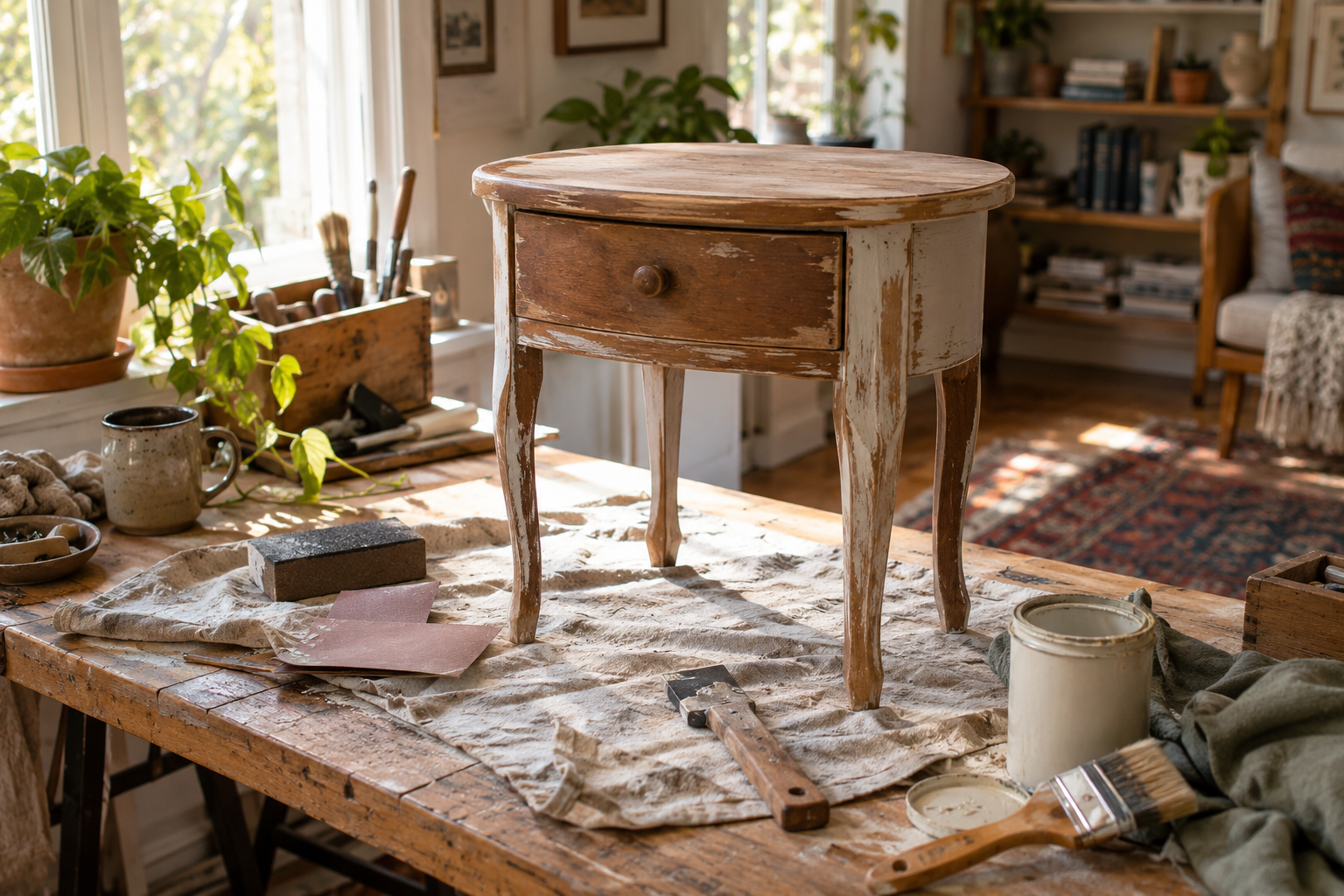
    A half-finished furniture project with tools and materials on a work surface.

    3. Go somewhere at slightly the wrong time

    We tend to imagine leisure happening at the approved leisure times.

    Dinner at eight. Cinema at seven. Drinks on Saturday night.

    You don’t actually have to cooperate with this.

    Go to the first cinema showing on Saturday morning. Have lunch somewhere lovely at three o’clock. Go to a museum as soon as the doors open. Have an elaborate breakfast on a Saturday morning when everybody else appears to be recovering from Friday night.

    There’s something rather luxurious about using a place when it isn’t at full social volume.

    And if eating alone in a busy restaurant on Saturday night isn’t your idea of fun, that doesn’t mean restaurants are unavailable to you. A beautiful lunch at 2.30 can be an entirely different experience.

    You don’t have to prove you’re comfortable doing everything alone in the most intimidating circumstances available.

    Pick the version you actually enjoy.

    4. Learn something that leaves you holding something

    There are classes where the result is mainly that you attended a class.

    Then there are classes where you leave carrying a wonky bowl.

    Choose the wonky bowl.

    Pottery, printmaking, jewellery-making, upholstery, woodworking, sewing, stained glass, floristry, bread-making, photography, furniture restoration.

    The particular activity matters less than having something tangible happening in front of you.

    It also solves one of the awkward things about going somewhere alone: you don’t have to spend two hours wondering whether you’re supposed to be making conversation.

    Everybody is busy trying not to ruin their bowl.

    And if you do talk to someone, you’ve already got something to talk about.

    “Is yours supposed to look like that?”

    “No.”

    Friendship has begun under worse circumstances.

    Hands working with clay during a pottery class.

    5. Become a regular somewhere

    This is different from “go to a café.”

    Going to a café is an activity. Becoming a regular is a tiny piece of infrastructure in your life.

    Pick somewhere you genuinely like—a café, pub, market, independent cinema, library, gallery, bookshop—and start going often enough that it becomes your place.

    You don’t need to become best friends with the staff. Nobody needs to shout your name when you walk through the door.

    The value is smaller than that.

    You know where you like to sit. You know what’s good. You recognise a few faces. Someone eventually recognises yours.

    For people who live alone, there can be something surprisingly pleasant about having places outside home where your presence is ordinary.

    6. Go and watch something happen

    A lot of suggestions for meeting people or getting out of the house involve participation.

    Join a group! Take a class! Introduce yourself!

    Sometimes you really don’t want to.

    So go somewhere where your only responsibility is to turn up and look in the correct direction.

    A small gig. Local theatre. Stand-up comedy. A public lecture. A football match. Horse racing. An exhibition opening. A book reading. A choir. A university talk. A ridiculous local festival celebrating a vegetable you’ve never previously had strong feelings about.

    Being alone is much less conspicuous when everyone is there because something is happening in front of them.

    You can talk to people if you want to.

    You can also watch the thing and go home.

    Both count.

    Rows of seats in an atmospheric cinema or theatre before a performance.

    7. Make lunch the event

    Saturday night has had excellent marketing.

    Dinner. Drinks. Parties. Dates. Gigs. Everybody apparently having the time of their lives between 7pm and midnight.

    Lunch deserves better representation.

    Book somewhere you’ve wanted to try. Dress nicely if you feel like it. Order the thing you usually talk yourself out of. Have dessert. Sit there for an hour and a half.

    Then leave at four o’clock with the main event of the day already successfully completed.

    There is something deeply satisfying about walking home while everyone else is only beginning to wonder what they’re doing that evening.

    8. Try something you’re allowed to be bad at

    Adult hobbies have somehow become alarmingly professional.

    You start running and somebody asks when you’re doing your first half-marathon. You buy some wool and three weeks later the internet wants to know when you’re opening an Etsy shop.

    No.

    Try something with absolutely no intention of becoming impressive at it.

    Archery. Salsa. Ceramics. Paddleboarding. Drumming. Life drawing. Golf. Improv. A language. Roller skating.

    Go once.

    You are not choosing your new identity.

    You are spending two hours finding out what firing an arrow feels like.

    If you hate it, excellent. That’s one fewer thing you need to wonder about.

    9. Volunteer somewhere that expects you back

    One-off volunteering can be worthwhile, but recurring volunteering offers something slightly different.

    You start knowing people.

    They start knowing you.

    You have somewhere you’re expected to be at ten on Saturday morning, and people notice if you’re not there.

    Research has found associations between volunteering and social, mental and physical wellbeing, although the evidence isn’t strong or universal enough to turn volunteering into a prescription for happiness.

    That might be an animal rescue, community garden, charity shop, food project, theatre, sports club, conservation group or something completely specific to where you live.

    This isn’t really about filling time.

    It’s about becoming part of the furniture somewhere.

    There are worse things to build into a weekend.

    10. Be a tourist ridiculously close to home

    We save an extraordinary number of things for hypothetical visitors.

    That castle? Never been.

    The museum everyone recommends? Keep meaning to.

    Boat trip? That’s for tourists.

    Walking tour? Absolutely not. You live here.

    Apparently familiarity means we’re no longer allowed to be interested.

    Pick somewhere within an hour or two of home and treat it as though you’ve arrived for the weekend.

    Take the tour. Read the plaques. Go inside the building you’ve walked past 400 times. Buy the overpriced coffee. Find out why the statue in the square is holding a fish.

    You may discover your local area is considerably more interesting when you stop using it solely to get from one errand to another.

    Architectural details in a local area viewed as a visitor might see them.

    11. Invite people to something that already has a shape

    Sometimes the difficulty isn’t having nobody you could possibly contact. It’s that “We should get together sometime” requires far too much administration.

    Try making the plan first.

    “I’m going to the food market Saturday morning if you fancy coming.”

    “I’m seeing that exhibition at two.”

    “I’m making far too much chilli on Sunday. Come over at six if you’re around.”

    One person may come. Three might. Nobody might.

    If nobody does, you still have a plan.

    That’s much easier than putting your entire weekend on hold waiting to see whether somebody else becomes available.

    A rumpled sofa with a blanket, mug and remote on a quiet afternoon.

    12. Waste the entire day

    This one is important.

    You are also allowed to do absolutely nothing useful.

    Stay in your pyjamas. Watch four films. Eat toast at 3pm. Spend an irresponsible amount of time reading about a celebrity scandal involving people you’d never heard of yesterday. Fall asleep on the sofa. Order dinner.

    Don’t call it self-care.

    Don’t make a gratitude list.

    Don’t use the day to “reset for the week ahead.”

    Waste it.

    People in relationships do this all the time without anyone suggesting they need to learn how to embrace their own company.

    A full life doesn’t require every available hour to be full.

    Sometimes Sunday evening arrives and you haven’t made a memory, expanded your social circle, improved yourself or discovered an exciting new passion.

    You just had a weekend.

    That’s allowed too.

    Sources / Further Reading

    Cleary, M., Le Lagadec, D., Thapa, D. K. & Kornhaber, R. (2025). “Exploring the Impact of Hobbies on Mental Health and Well-Being.” Issues in Mental Health Nursing.
    https://pubmed.ncbi.nlm.nih.gov/40489730/

    Nichol, B. et al. (2024). “Exploring the Effects of Volunteering on the Social, Mental, and Physical Health and Well-being of Volunteers: An Umbrella Review.” VOLUNTAS: International Journal of Voluntary and Nonprofit Organizations.
    https://link.springer.com/article/10.1007/s11266-023-00573-z

  • Forget Companionship. Can You Hold This?

    Forget Companionship. Can You Hold This?

    After many years of being single, I think I’ve finally discovered the strongest argument for having a partner.

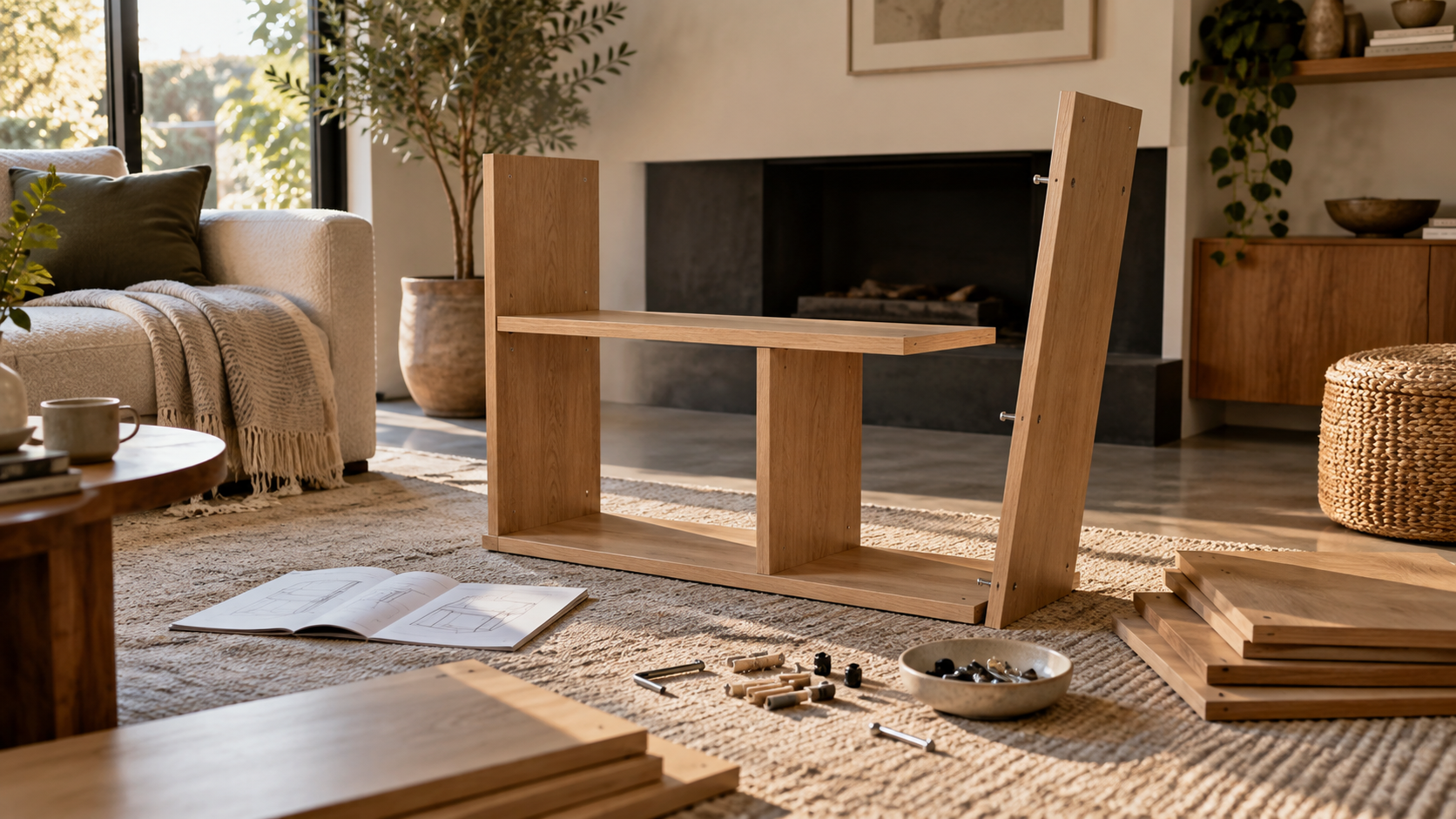
    Flat-pack furniture.

    Nobody mentioned this. I’ve heard plenty about companionship, emotional support and having someone to share your life with. But nobody ever said, “At some point you’re going to buy a bookcase and the instructions will suddenly require a second human.”

    And IKEA are at least honest enough to draw the second person in the instructions. Bit late by then, though. You’ve already bought it. You’re sitting on the floor surrounded by 74 screws and three pieces that all appear to be called B when you turn the page and suddenly there’s another little man. Who is he? He wasn’t on the shopping list. Was I supposed to pick him up in Home Accessories? Because I have the bookcase. I have the Allen key. I’ve even got the little wooden dowels that will somehow still be left over at the end.

    I do not have Lars.

    So now you’re holding one side up with your knee, balancing the other against the sofa and using your chin for something no chin was designed to do. Then people come to your house afterwards and say, “Is that shelf slightly crooked?” No. It’s bespoke.

    And apparently IKEA aren’t the only ones who assume Lars is hanging around. Who exactly is putting zips up the backs of dresses? Because I can get into the dress. I can get most of the way into the dress. But apparently the final three inches require a husband, a lady’s maid or the shoulder mobility of a Cirque du Soleil performer.

    Eventually you’re standing in front of the mirror with a coat hanger hooked through the zip thinking, This cannot possibly be what they intended.

    Playsuits are even better. We have collectively decided it’s acceptable to sell women an outfit they cannot go to the toilet in without project management. Although women have solved this themselves. How many women have you undressed in pub and nightclub toilets whose names you never knew?

    There is a very specific look a woman in a playsuit gives another woman on the way into a cubicle. No words are required. Zip? Of course. Five minutes later she’s back. Again? Turn around.

    That’s community.

    Forget neighbourhood initiatives. Put twelve women in a bathroom with badly designed clothing and society will rebuild itself. Men have no idea this is happening. Somewhere a man is outside the toilet thinking, Why do women always go in groups? “Because Claire is trapped in her own outfit, David.”

    And really, this is when you start to realise you don’t need another person around all the time. You need part-time staff. Nothing extravagant. I’m not asking for a butler. Just one person permanently on standby for all the things manufacturers have decided cannot be accomplished with the standard allocation of two human arms.

    Sometimes, though, your part-time staff member doesn’t actually need any useful skills. Apparently they just need to make up the numbers.

    Take a dance class. “Everybody pair up!”

    Nothing makes adults regress to being twelve years old faster than somebody saying find a partner. You could have been chatting happily to someone for twenty minutes, but the second the instructor says “pairs,” she’s grabbed Margaret and won’t make eye contact with you.

    Now you’re doing that little scan of the room. One, two. One, two. One, two. And across the room, another woman is doing exactly the same calculation. Your eyes meet. There you are. Neither of you needs to say it; the numbers have spoken. Apparently you’re doing salsa together.

    Restaurants are slightly different. They don’t insist you produce a second person. But every now and then you get the distinct impression it would have made things easier if you had.

    “Table for one?”

    “Yes.”

    It’s the volume they use when they remove the second place setting that gets me. CLANK. There goes the other wine glass. SCRAAAAAPE. Spare chair pushed in. CLATTER CLATTER. Knife and fork removed. Thank you. Could you ring a little bell as well? Maybe make an announcement.

    LADIES AND GENTLEMEN, THE SECOND DINER IS NOT RUNNING LATE. THERE IS NO SECOND DINER. WE MAY NOW REMOVE THE SIDE PLATE.

    After all these years, perhaps I’ve misunderstood the problem. I don’t need a husband. I need somebody to hold this end, zip this up, tell me if that’s straight, look at the back of my hair. I need Lars from IKEA between approximately 3:15 and 3:20 on Saturday afternoons.

    There should be an app for this. Not Tinder.

    Holder.

    You don’t even upload a photograph. Just skills: Good with zips. Owns drill. Tall.

    I’d swipe right on that.

  • “It Just Never Happened”: What If You Never Actually Decided Not to Have Children?

    “It Just Never Happened”: What If You Never Actually Decided Not to Have Children?

    There are certain questions people ask that seem perfectly innocent until you’re the person expected to answer them.

    “Why didn’t you have children?” is one of them.

    I’ve never really understood why people feel the need to ask. Having children is generally treated as something that requires no explanation. Not having them, apparently, does.

    And perhaps there is a reason. The problem is that I’m not entirely sure what mine is.

    I could say I never wanted children, but that wouldn’t be quite true. I could say I desperately wanted them and couldn’t have them, but that wouldn’t be true either. I didn’t make a firm decision that motherhood wasn’t for me, but I didn’t organise my life around making it happen either.

    Mostly, it just… didn’t.

    Which sounds suspiciously like avoiding the question until you discover that quite a lot of people give exactly the same answer.

    Apparently, “it just never happened” is a real answer

    In 2024, Pew Research Center asked Americans aged 50 and older who had never had children whether there had been a time when they wanted them. Thirty-eight per cent said yes. Thirty-two per cent said they had never wanted children. Another quarter said they hadn’t been sure either way.

    When the same group was asked why they hadn’t had children, the most commonly cited major reason wasn’t a deliberate decision to be childfree. It wasn’t infertility either. It was simply that “it just never happened.”

    Thirty-nine per cent gave that as a major reason. A third said they hadn’t found the right partner, while 31% said they simply hadn’t wanted children.

    That is an awful lot of people for an experience we don’t seem to have particularly good language for.

    When we talk about women who don’t have children, we tend to reach quickly for one of two words: childfree or childless. And there are good reasons why people care about the distinction.

    Childfree generally describes someone who has chosen not to have children. For women who have made that decision deliberately, childless can sound as though something is missing from their lives. It takes a choice they are perfectly happy with and turns it into a deficiency.

    But childfree can be equally inappropriate for someone who desperately wanted children and couldn’t have them. The word “free” can imply liberation from something that, for that woman, may represent an enormous loss.

    These aren’t trivial semantic differences. There can be identity, grief and years of difficult experience sitting behind one word. So I understand why people are protective of the terminology.

    I’m just not entirely sure where that leaves the rest of us.

    Did I want children, or did I expect to have them?

    Perhaps I’ve been asking myself the wrong question.

    Instead of Did I want children?, maybe the more interesting question is: Did I expect to have them?

    Because those are not necessarily the same thing.

    For much of my younger life, I think I assumed I’d probably have children. Not because I had mapped it all out, chosen names and established a timetable. It was simply somewhere in the vague picture of what adult life would eventually look like.

    You meet somebody. You form a relationship. At some point you settle down. Then children become a conversation.

    Step 1. Then Step 2.

    Except I wasn’t in the relationship that made Step 2 feel like a legitimate possibility. And if you don’t have Step 1, why would you necessarily be spending much time making decisions about Step 2?

    There is evidence that partnership really does affect how people think about having children. Research across European countries has found that not having a suitable partner is an important reason fertility intentions go unrealised, while being in a relationship is generally associated with a greater intention to have children. The relationship between partnership and fertility intentions also changes with age.

    That makes intuitive sense to me. If I’d been in a serious relationship at 30 and the person sitting opposite me had said, “Do we want children?”, I would have had a real question to answer. Without that relationship, the question remained hypothetical.

    There was always later.

    But if I really wanted it, wouldn’t I have done something about it?

    This is the uncomfortable bit, because there is an obvious response to everything I’ve just said.

    Fine. I wasn’t in a relationship where children naturally became a possibility. But relationships don’t arrive by lottery.

    If having children had been extremely important to me, couldn’t I have made more effort to find a partner? Dated more. Treated finding a relationship as a priority rather than something I assumed would eventually happen. And later, couldn’t I have considered other routes to motherhood?

    Yes, I could have. Which brings me back to the question I can’t quite answer: How badly did I actually want children?

    There are people who inherently know they want to be parents. It isn’t a vague future possibility to them. It is something they actively want, and if the conventional route doesn’t materialise, they may look seriously at other ways of getting there.

    I didn’t do that. Surely that tells me something.

    But I’m not convinced it tells me that I didn’t want children.

    Research on women who describe themselves as childless by circumstance illustrates how complicated that distinction can be. In one study of women aged 46 and older who said they had wanted children, 15% had never actually tried to have them. Among that group, the most common reason was not having a partner.

    At first, that sounds contradictory. If you wanted children, why didn’t you try to have them? But perhaps it only sounds contradictory if we assume that wanting a child and wanting to become a parent under any circumstances are the same thing.

    For some women, they may be. For others, the thing they imagined wasn’t simply me + child. It was me + partner + child.

    Remove the partner and you haven’t necessarily removed one inconvenient step on the way to the same destination. You may have changed the destination itself.

    Maybe there is an enormous territory between I definitely don’t want this and I want this enough to restructure my life in order to make it happen.

    Children are different from most of life’s unrealised possibilities, though, in one rather important way.

    You don’t have forever to decide.

    What if you don’t realise you’re deciding?

    I think this is the part I missed when I was younger.

    The traditional timeline didn’t only tell us what life was supposed to contain. It told us the order in which things were supposed to happen.

    Relationship first. Then marriage, perhaps. Then children.

    You didn’t necessarily need to make a standalone decision about motherhood because, according to the script, there would be a point at which the decision naturally presented itself.

    Except life doesn’t always follow the script. If the relationship doesn’t arrive, the next question can remain waiting for the previous answer.

    Researchers studying fertility intentions have found something that sounds remarkably like this happening in real life. Partnership becomes increasingly relevant to intentions around having children as people move through adulthood, while previous research cited in one large European study found that many women who ultimately remained childless had repeatedly postponed childbearing before eventually coming to expect that they would not have children.

    That word — postponed — interests me, because postponing something doesn’t feel like rejecting it. It feels like not now.

    And not now can remain not now for a surprisingly long time.

    Some women know they want children and pursue motherhood without a partner. Some preserve fertility options where they can. Some date very intentionally because having a family is a priority. Others know with equal certainty that they don’t want children at all.

    But what if you don’t experience either certainty? What if you think you’ll deal with the question when it becomes relevant, and the circumstances that would have made it relevant never arrive?

    Then the question starts to change

    Perhaps this is part of why I find myself thinking about it differently in my 40s.

    There isn’t a birthday on which motherhood suddenly becomes impossible. Fertility declines gradually and individual circumstances vary enormously. Women do become pregnant in their 40s.

    But there is also no pretending age is irrelevant. Female fertility declines with age, more rapidly from the mid-30s onwards, and by the 40s the conversation around it becomes noticeably different.

    So the question I could leave sitting comfortably in the future at 28 doesn’t feel quite the same now.

    Becoming aware that an option may be narrowing doesn’t automatically tell you whether you wanted it. If anything, it can make the question harder.

    Am I looking back because I wanted children, or because I’m realising I may not always have the option?

    Those aren’t necessarily the same thing.

    It’s only when you realise a choice might not be available much longer that you can find yourself wondering what you would actually have chosen. And perhaps that’s when you start looking backwards for the decision.

    When did I decide this?

    The uncomfortable answer might be that I didn’t. Not in one recognisable moment anyway.

    Why am I explaining this to you?

    Which brings me back to that apparently simple question: “Why didn’t you have children?”

    The woman you’re asking may never have wanted them. She may have desperately wanted them and been unable to have them. There could have been infertility, pregnancy loss, a partner who didn’t want children or simply no partner with whom having them felt possible. She might once have wanted children and changed her mind, or assumed there would be time to decide later.

    She might be completely at peace with how things turned out. She might not be. Or she might genuinely not know how to compress decades of decisions, non-decisions and circumstances into an answer that makes sense over dinner.

    That’s quite a lot of personal territory contained in a question we sometimes ask people remarkably casually.

    And I still wonder why the explanation is required in one direction but rarely the other.

    I didn’t ask you why you did.

    Maybe there was never one decision

    I can look back and ask whether I wanted children badly enough. Whether I should have dated more. Whether I should have thought about it sooner. Whether I allowed circumstances to make the decision for me. Whether expecting something without actively pursuing it counts as wanting it at all.

    I can make a reasonable argument on both sides.

    What feels different now isn’t that I’ve suddenly discovered the answer. It’s that for most of my adult life, I thought the question was still ahead of me.

    Children belonged somewhere further along the timeline. First came the relationship. Then, if and when that happened, I’d think seriously about what came next.

    I didn’t get to that point, so the question remained somewhere in the future. Until eventually the future wasn’t quite as open-ended as I’d assumed.

    And I think that’s the part of “it just never happened” that can be difficult to explain. It doesn’t necessarily mean there was nothing you could have done differently. It doesn’t mean you had no choices. And it certainly doesn’t mean you secretly wanted children all along.

    It can simply mean that there was never one clear moment when you remember deciding no.

    Instead, you reach an age when the possibility no longer feels indefinite, look back at a decision you thought was still somewhere ahead of you, and realise that somehow it ended up behind you.

    I’m still not sure what you call that.

    I’m not sure I need to be.

  • What Does Financial Independence Mean When You’re Single?

    What Does Financial Independence Mean When You’re Single?

    I don’t remember ever making a conscious decision that I was going to build my financial life around one income forever. I wasn’t spending money assuming that eventually a partner and a second salary would arrive either. I think I just didn’t plan particularly hard for either possibility.

    There is a difference between those things that I probably wouldn’t have appreciated when I was younger. You can be financially independent in the sense that you work, pay your own bills and support yourself without necessarily thinking very far ahead about what happens if you are still the only person doing all of those things in 10, 20 or 30 years.

    At some point, the hypothetical future has to stop being part of the financial plan. I could meet somebody next year. I could be single for the rest of my life. Either is possible. But I can’t make decisions today based on the salary of a person I haven’t met.

    That doesn’t mean I think being single is financially harder in every respect. I don’t have children whose education I need to plan for. I make financial decisions for one person. Nobody else’s spending habits, debts or financial priorities have to be negotiated alongside mine. But there is another side to being the only person in the financial plan. If the income stops, all of it stops.

    One income isn’t necessarily worse. It is different.

    I saw this quite clearly when redundancies were being offered at work. For some people, part of the calculation was that they would receive a lump sum and their partner would continue earning while they looked for another job.

    My calculation couldn’t include that. I don’t know that having a partner with a stable income would have changed the decision I made, but I know I would have given the redundancy more consideration. There would have been another layer of protection between losing my salary and things becoming seriously difficult.

    Instead, I had to consider what would happen if finding another job took much longer than expected. One possibility was that eventually I might have to move back in with my parents.

    I’m very fortunate that this was a possibility rather than a fear of having nowhere to go. I have family members who would let me live with them if something went badly wrong, and family who would have some capacity to help me financially for a while if I genuinely needed it. Plenty of people don’t have either of those things, and I’m very aware of the difference that makes.

    Would I enjoy asking for that help? Absolutely not. I would probably have to be dragged to the point of admitting I needed it. But knowing the safety net exists still makes it a safety net.

    That’s one reason I don’t think comparisons between single people and couples are particularly useful here. A married couple might have two salaries, or they might have one. They might have children, enormous expenses and no savings. Both people might be working and still living from one payday to the next. A job loss in that household could be every bit as serious as it would be in mine, perhaps considerably more so when other people are depending on the money.

    The more useful question isn’t necessarily who has it harder? It’s what happens if something goes wrong?

    For one person, the answer might be a partner’s income. For another, savings. For someone else, parents or siblings. It might be insurance, a redundancy payment, a second job or the possibility of moving somewhere cheaper. Some people have several of those options. Some have none.

    Being single doesn’t automatically mean having no safety net. But it can mean having to think more deliberately about where yours actually is.

    Housing makes one income feel very real

    Nowhere does this become more obvious to me than housing.

    Saving for a deposit on one income is difficult enough when you’re also covering the full rent yourself. But in Ireland, where I live, there is another fairly brutal piece of arithmetic involved. Mortgage lending rules generally limit a first-time buyer to borrowing four times gross annual income, although lenders are permitted some lending above that limit.

    There are perfectly sensible financial-stability reasons for lending rules. Unfortunately, understanding why a rule exists does not make the house at the end of the calculation any larger.

    In today’s market, I could maybe buy a shed.

    What can be particularly frustrating is knowing how much you’ve been paying in rent and then discovering that this doesn’t simply translate into being allowed to borrow enough to buy an equivalent home. The exact mortgage systems are different from country to country, but trying to enter a housing market on one income is hardly an exclusively Irish experience.

    There is an obvious alternative for single people: buy with somebody else. I actually considered buying a house with a friend when I was younger. I’ve also seen siblings buy together. It can make complete sense at the time. Two incomes, two people contributing to the deposit and a home neither might have been able to buy alone.

    The difficulty is that a mortgage can last considerably longer than the circumstances that made buying together seem like a good idea. I’ve seen what can happen when one person’s life changes and they want to move on. Perhaps they meet somebody and want to buy a home with their partner, while the person remaining in the original property can’t qualify to take over the existing mortgage alone. Selling isn’t necessarily an attractive solution either, particularly if the property has fallen substantially in value.

    A decision that helped two people move forward together can eventually leave both of them stuck.

    That doesn’t mean friends or siblings should never buy property together. It means “just buy with somebody else” isn’t quite the simple solution it can sound like.

    Sharing accommodation is simpler, of course, and if I could go back in time I probably wouldn’t have been in such a hurry to live alone. I actually quite liked sharing with someone when I was younger. There were obvious financial advantages, and at that stage of life there was nothing unusual about it.

    But I’ve now lived alone for more than ten years. Part of the problem with deciding to share again is practical. At 40, you don’t necessarily have a collection of friends looking for someone to share a house with, and the thought of moving in with strangers feels very different from how it did when everyone was younger. But part of it is simply that I’ve become used to my independence. My home is mine. I like the privacy. I like being able to decide how I live in it.

    If living alone became financially impossible to sustain, I would make a different decision. What I wouldn’t do is voluntarily give it up for the next ten years simply because somebody could show me a spreadsheet proving that I’d have considerably more money at 60.

    Perhaps that isn’t the mathematically optimal financial decision. But I’m not sure the purpose of financial independence is to make every decision according to which one leaves you with the most money.

    Some future expenses don’t have names yet

    Having no children obviously changes my financial responsibilities. I don’t have to think about putting one child through university, never mind several of them. There aren’t school costs, childcare costs or all the other expenses that come with raising a family.

    Research in the US reflects some of that financial difference. Majorities of adults without children told Pew Research Center that not having children had made it easier to afford the things they wanted and to save for the future.

    But I think there’s another side to this that is easy to miss. A parent saving for a child’s education has a future expense with a name attached to it. The fact that they are putting money aside doesn’t mean they get to keep that money as some wonderful financial buffer. They’re preparing to spend it on something they already know is coming.

    My future expenses can be less obvious. I need to think about retirement. I could lose my job. My housing situation could change. I could become ill. I might need care when I’m older. There may be expenses twenty years from now that I haven’t even considered yet.

    That doesn’t mean my future is financially more frightening than somebody else’s. Parents have all of those uncertainties too, on top of responsibilities I don’t have. In fact, Pew’s research on Americans over 50 found that parents were more likely than people without children to say they frequently worried about having enough money as they aged.

    Again, nobody wins the competition.

    But I do wonder whether a family creates a kind of financial accountability that can be easier to avoid when the only person affected by your decisions is you. That isn’t true of everyone. Some people are naturally extremely responsible with money regardless of their relationship status, and having a partner certainly doesn’t guarantee sensible financial behaviour.

    Still, there is something different about another person knowing the financial plan. There may be children whose future needs force certain conversations. There may be two adults saying we need to put money aside for this rather than one person deciding whether Future Me really needs the money more than Present Me does.

    The freedom of being answerable only to yourself is genuinely freedom. It can also make you very good at negotiating with yourself.

    Who exactly am I leaving all this to?

    I didn’t start a pension until I was in my 30s, and at the time I felt horribly behind. I’d been unemployed before, and that experience had made me think much more seriously about wanting to be financially independent later in life.

    I have life cover too, and the types of jobs I’ve had have generally come with death-in-service benefits. None of this means I’ve built up some enormous fortune, but it does mean there’s a slightly strange possibility that I could be worth considerably more money dead than I currently have sitting in the bank.

    Which raises a question I probably should have answered by now: who gets it?

    If I had a partner and children, there would probably be a fairly obvious answer. That doesn’t mean estate planning is automatically simple for someone with a partner and children, but there is at least a more obvious direction in which most people’s minds would go. Mine can go in several.

    Do I leave everything equally to my siblings? What if one sibling is financially established and another isn’t? Should that make a difference?

    Do I skip my siblings and leave it to nieces and nephews instead? If I do, does everybody get an equal share? What if I’m much closer to some than others? What if one genuinely needs the money more?

    There probably isn’t a morally correct answer to any of those questions. But they are decisions somebody in my position has to make if I want to decide where things go.

    A will is also one of those things that’s very easy to treat as a problem for Future You, particularly when you’re healthy and don’t expect anything to happen. Unfortunately, death has never shown much respect for people’s administrative schedules. If you don’t make decisions about your estate yourself, eventually the law makes them for you.

    I should probably sort that out. Perhaps publicly admitting that will embarrass me into doing it.

    The point isn’t to have the most money when you die

    I think I used to understand financial independence mainly as being able to pay my own way. I still think that’s part of it. But the older I get, the more I think it also means building enough resilience into my life that one bad event doesn’t immediately remove all of my choices.

    That’s harder to measure. It might mean savings. A pension. Insurance. Keeping your skills current enough that you can find another job. Having people you could call if everything went wrong. Knowing what you’d do about housing. Making a will. Perhaps even being willing to take on additional work for a while if circumstances demanded it.

    Being single gives me some flexibility there too. I have more control over my time than I might have if I had children depending on me. If I genuinely needed to take a second job or try to create another source of income, there are circumstances in which that might be easier for me. Then again, in a couple there are potentially two people capable of solving the same problem.

    There it is again. For almost every financial disadvantage I can identify in one kind of life, I can think of circumstances that reverse it.

    So I don’t think I’ve discovered that single people need to save more, worry more or live more cautiously than everybody else. I certainly don’t think the answer is that we should spend our 40s depriving ourselves because there might never be another income.

    I could save money by giving up living alone. I could probably eliminate all sorts of things I enjoy and send the money straight to my pension. Future Me might be delighted with the result.

    Present Me still has to live here.

    There has to be some balance between protecting the woman I might be at 70 and allowing the woman I am now to have a life she actually enjoys.

    Perhaps that’s what financial independence means to me now. Not having so much money that nothing can ever go wrong, and not pretending that I’ll never need anyone. Just making sure that the financial plan I’m building actually belongs to the life I’m living.

    Because somebody else may eventually become part of that life.

    But I don’t think I should need them to arrive for the plan to work.

  • Why Is It So Hard to Make Friends After 40?

    Why Is It So Hard to Make Friends After 40?

    I don’t actually have much trouble meeting people. I can walk down the street and know people to stop and talk to. I can walk into a pub and know the majority of the people there. We can sit together, have proper conversations, laugh and genuinely enjoy each other’s company.

    Then we go home. Nobody necessarily texts the next morning. There may be no plans for the following weekend. We’ll probably see each other again, but only when we happen to find ourselves in the same place. That’s the difference I’ve started to notice as I’ve got older. I know plenty of people. That isn’t quite the same as having plenty of good friends.

    I would still call many of those people friends. Describing them as acquaintances seems unnecessarily dismissive when I’ve known some of them for years and genuinely like them. But there are clearly different levels of friendship, even if we use the same word for all of them. I have a slightly ridiculous test for this: if someone told me I was going away with this person for a few days and we’d be sharing a hotel room, how would I feel? There are people I happily call friends who would have me reconsidering the classification fairly quickly.

    So perhaps making friends after 40 isn’t always difficult because we can’t meet people. The harder part is turning someone we know and like into someone who becomes part of our actual life.

    Friendship used to happen without so much organising

    Most of my close friends are people I met when I was young. Some are from school and others came from an after-school job. I don’t think that’s because I stopped meeting people I liked as I got older. I think it’s because when I was younger, I didn’t have to arrange friendship in quite the same way.

    You could meet someone once and suddenly be best friends. You had fewer restrictions on your time, but you were also repeatedly ending up in the same places. You saw each other at school or work. Most people of the same age in an area were going to the same places at the weekend. If you met someone you liked on Saturday night, there was a reasonable chance you’d both be in the same place the following Saturday. Nobody had to make much effort to ensure you met again.

    It turns out all those hours matter. Research into friendship formation has found that it can take roughly 40 to 60 hours together to move from acquaintance towards friendship, and considerably longer to develop a close friendship. When you’re young, you can accumulate that sort of time without noticing. You might see someone five days a week before you’ve ever deliberately arranged to see them.

    Try accumulating the same amount of time with someone new in your 40s and it looks rather different. A coffee here, a night out three weeks later, another plan that gets postponed because one of you is busy. Months can pass while both people genuinely intend to see more of each other.

    And being single with no children doesn’t somehow leave you with an empty diary. There is still work, family, existing friends, appointments, responsibilities and everything else that fills an adult life. The other person has all of those things too, possibly with a partner and children added in. Two people can genuinely want to meet and still somehow spend six weeks trying to find a Thursday that suits them both.

    Our oldest friends also have something that no new person can offer us: history. I sometimes wonder how many people who have been close friends for 20 or 30 years would actually become friends if they met for the first time at 40. Perhaps one would think the other was too loud, too quiet or simply not her type of person.

    But they didn’t meet at 40. They met years ago, and everything that has happened since has become part of the friendship. They remember the people each other used to be as well as knowing the people they’ve become. There are stories they’ve told so often nobody else would find them funny anymore, difficult periods they went through together and ordinary years that somehow added up to a shared history.

    By the time we reach our 40s, many people already have those relationships, sometimes several different groups of them: school friends, work friends, neighbours, other parents, people they go out with. They’re often already struggling to find enough time for the friends they have. It isn’t necessarily that people become less open to friendship as they get older. Sometimes a new person is simply arriving in a life that already feels full.

    Being around people isn’t enough

    This is where the standard advice about making friends starts to irritate me slightly: get a hobby.

    I understand why people say it. If you join something, you’ll repeatedly meet people with at least one shared interest, and that gives friendship an opportunity to develop. If you genuinely want to take up tennis or join a running club, it probably makes perfect sense.

    Unfortunately, I don’t like sports and couldn’t run the length of myself if I tried. I’m fairly sure my teammates would be more interested in finding a replacement for me than becoming my new best friends.

    And what if you genuinely don’t have a hobby you want to pursue? If I force myself to take up something I have no particular interest in purely to meet people, I’m not convinced I’ve found people with similar interests. They actually like the activity. I’m there because apparently this is how the internet has decided adults make friends.

    That’s not to say classes, clubs and hobbies don’t work. Of course they do. But they only solve the first part of the problem: putting people in the same place. I learnt through work that being in the same place can create very real friendships, but it can also hide how much the place itself is helping to hold them together.

    I spent ten years in my last job, and I thought I had made friends there who would be in my life permanently. At the time, there was no reason to think otherwise. We spent our days together, knew what was happening in each other’s lives and genuinely cared about one another.

    I’ve been gone for about a year now. I still speak to some of them, but some of the messages have already become less frequent. I can imagine that, with some people, they may eventually become an annual happy birthday or happy Christmas message. That doesn’t make me think those friendships were fake. They were real. I just hadn’t appreciated how much seeing each other every day was helping us stay close. We didn’t have to find time for each other because work had already done it for us.

    Texting makes it possible to keep some contact without seeing each other, and that’s obviously useful. But staying in contact with somebody isn’t necessarily the same as staying close to them. If months are passing and most of the relationship has become occasional words on a screen, something has changed even if neither person deliberately changed it.

    Perhaps that’s why meeting people has never felt like the hardest part to me. I meet people. The difficult part is what happens after you’ve met.

    Somebody has to make the next thing happen

    One of the closest friends I’ve made in recent years came from a pub I was already going to. I knew people there and would happily sit talking to them, but I wasn’t arranging to meet any of them. I saw whoever happened to be there on the night.

    Then one woman asked for my number. She said she’d text me the next time she was going out, and she did. For whatever reason, I said no the first couple of times she asked. The third time she invited me, I was genuinely sick. I remember saying to my brother that I thought I needed to go anyway. If somebody asked me out three times and I said no three times, she would be perfectly entitled to stop asking.

    So I went, and we’re now very good friends. I’ll probably never know why she made such an effort to include me, but I’ll always be grateful that she did. She could easily have continued chatting to me whenever we happened to be in the same place. Instead, she made sure there would be a next time.

    There is an uncomfortable part of that story for me too. I could have been saying that I wanted more good friends while repeatedly declining invitations from somebody who was trying to become one. I wasn’t deliberately rejecting the friendship. I just hadn’t reached the point where seeing her felt important enough to organise my life around.

    That’s one of the strange things about making a new friend as an adult. We make time for our existing friends because we already know what they mean to us. With someone new, you have to give the relationship some of that time before either of you knows whether it will become important. Somebody has to make an effort at the stage when there’s no guarantee the effort is going anywhere.

    It doesn’t help that adults can be incredibly enthusiastic about plans until the plans require an actual commitment. Anyone who has ever tried to organise a bus for a group of people will understand this. On day one, twenty people want to go and everyone is delighted with the idea. Then you ask for a deposit. Suddenly people aren’t sure. They’ll have to check. They’ll let you know.

    Before long, you’re no longer looking for a bus. You’re trying to find a taxi for yourself and the two people who are still coming.

    Friendship can suffer from the same problem. We should definitely do something is easy. Choosing a day and actually turning up is where it becomes real.

    Maybe we don’t need to start with strangers

    There are now friendship apps, organised meet-ups, group trips and events specifically for adults who want to meet new people. I seem to see more and more of them, and clearly there are plenty of people who want exactly that. I’m fairly certain I wouldn’t go to one alone, though. People who know me probably wouldn’t describe me as shy, but when I don’t know anyone, I’m horrendously shy and awkward. I’ve been told before that the awkwardness can make me appear snobbish, which is unfortunate when the entire purpose of the exercise would be convincing strangers that they might like to spend more time with me.

    I don’t think I’d use a friendship app either. I’m too cautious about how easily people can present themselves differently online, and I don’t think I’d ever completely put my guard down. Other people will feel completely differently, and for someone who has moved somewhere new or genuinely knows nobody, those options may be invaluable. But if I suddenly had to make more friends, I don’t think that’s where I’d begin. I’d start with the people I already know.

    There are people we repeatedly have good conversations with but never make plans with. Former colleagues we genuinely miss. People we always enjoy seeing when we bump into them. People we’ve been saying “we must do something” to for years without either person ever suggesting what that something might be.

    Maybe before asking where we can meet new people, it’s worth asking whether there is anybody we already know whom we’d like to know better. It removes at least some of the uncertainty. You already know you can hold a conversation. You know you don’t dislike each other. Nobody has to walk alone into a room full of strangers or develop a sudden passion for pottery just to meet people.

    Of course, there’s still an awkward bit. Somebody has to suggest doing something outside the place where you normally meet. Somebody has to send the message first. And there is something strangely vulnerable about admitting you want more friends.

    Nobody thinks it’s unusual for a single person to say she’d like to meet a partner. There are apps, events and entire industries built around helping her do exactly that. Saying you’d like to make a new close friend can somehow feel more embarrassing, as though friendship is something we were supposed to have sorted out years ago.

    But lives change. People move away. Jobs end. Friendships fade. Other people’s lives become busier. Sometimes we simply realise that knowing lots of people isn’t giving us quite the same thing as having a few people we can really depend on.

    For those of us who don’t have a partner or children at home, friendship can also provide some of the everyday companionship that other people may find within their household. It isn’t something that should be squeezed into whatever space is left after the relationships society considers more important. It can be one of the relationships around which a life is built.

    Perhaps making friends after 40 is difficult partly because life no longer does enough of the arranging for us. When we were younger, it kept putting us back in the same places until some of the people there became important. Now we can meet somebody we genuinely like and still never create enough opportunities for anything more to happen.

    My friend changed that by asking for my number and making a plan. I nearly made sure it went nowhere by saying no.

    And occasionally, when somebody asks us for the third time, we have to recognise that perhaps we should say yes.