
There is no shortage of advice on the internet about what to do when you’re single and have a weekend to yourself.
Go for a walk. Read a book. Take a bath. Start journalling. Declutter a drawer.
All perfectly reasonable suggestions. But if you’re sitting there on Friday evening wondering what you’re going to do for the next two days, there’s a good chance you already know that books and baths exist.
The problem isn’t necessarily that you can’t think of anything to do. It’s that none of the things you can think of sound particularly appealing.
And there’s something about a completely empty weekend that can make even perfectly independent people feel a bit… blank. During the week, time is spoken for. Work needs doing. Appointments happen. Things need buying. Then Saturday arrives with twelve completely unallocated hours and suddenly you’re expected to have hobbies.
So this isn’t a list of ways to become better at being alone. You don’t need to emerge on Sunday evening fitter, calmer, more cultured, with a sourdough starter and a newly discovered passion for watercolours.
There is some evidence that what we do with our leisure time matters. Research has linked hobbies with wellbeing, social connection, relaxation and pleasure. But that doesn’t mean you need to collect hobbies like Pokémon.
These are simply some things you might actually fancy doing.
1. Give your day out a mission
“Go into town” doesn’t sound particularly exciting.
“Find the best cinnamon bun in town” is a different proposition.
Give yourself something unnecessarily specific to accomplish while you’re out.
Find the ugliest ornament in three charity shops. Visit every independent bookshop within walking distance. Photograph five buildings you’ve never noticed before. Find somewhere that makes a genuinely excellent hot chocolate. Track down a particular ingredient you’ve never cooked with. Go looking for the best chips in your city and take the responsibility far more seriously than necessary.
It doesn’t really matter what the mission is.
What matters is that instead of wandering around trying to enjoy a day out by yourself, you’ve got something to do.
You’re looking. Comparing. Deciding. Getting mildly invested.
And when somebody asks on Monday what you did at the weekend, you didn’t just go into town.
You conducted an entirely unnecessary investigation into cinnamon buns and reached a conclusion you are prepared to defend.
That’s a day.
2. Have a weekend project with absolutely no productivity justification
Not every project needs to improve your home, your career, your health or your finances.
Sometimes it can exist solely because you want to see whether you can do it.
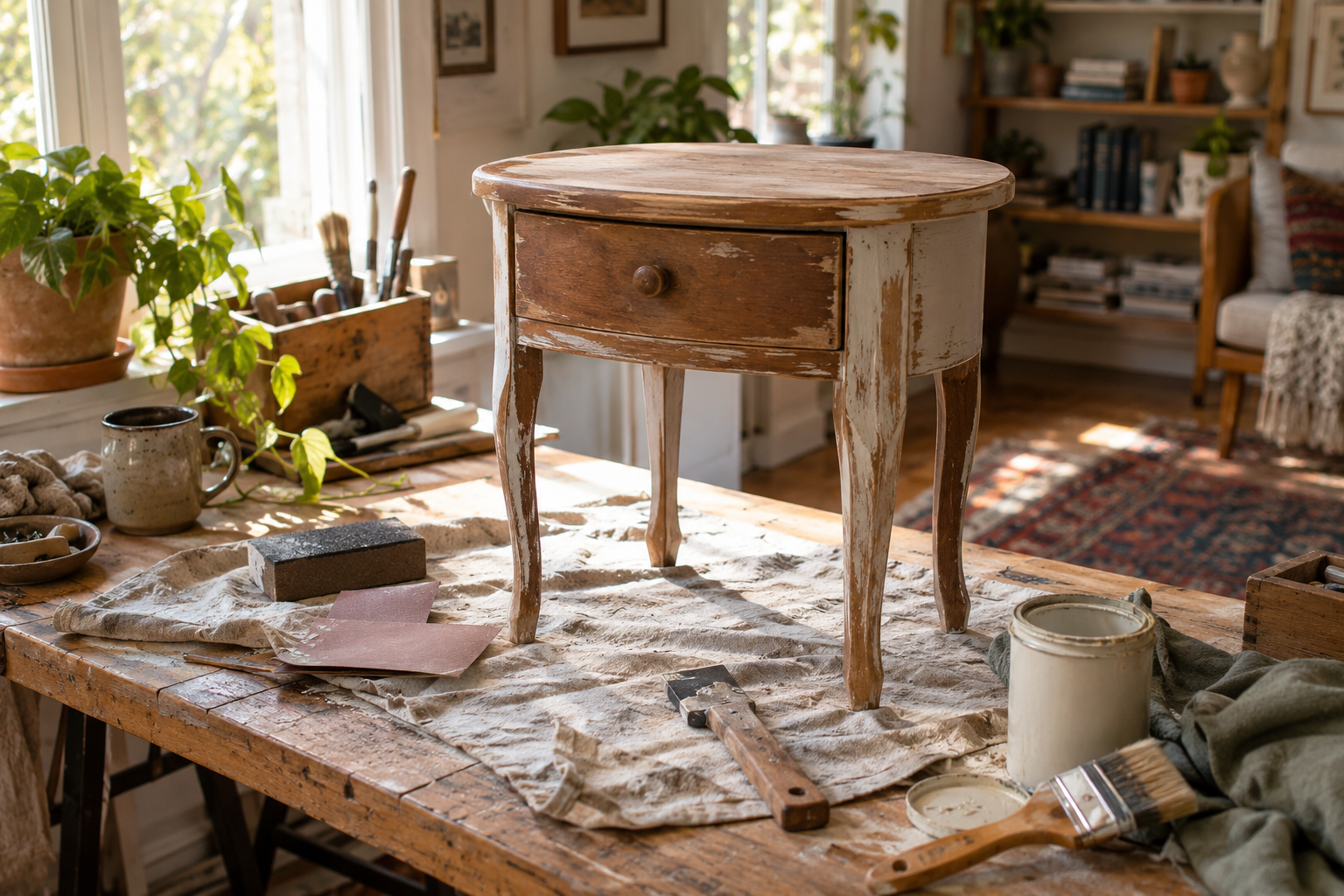
Make an unnecessarily complicated cake. Buy a battered little table for €10 and see what you can turn it into. Attempt to make pasta from scratch. Build a miniature room. Make a lampshade. Learn how to frame something properly. Recreate a dish you ate on holiday eight years ago and still think about.
The useful thing about a project is that it occupies your brain as well as your hands.
You start Saturday morning with a problem to solve. You need something from the hardware shop. The first attempt goes wrong. You watch a video. You go back to the shop because apparently there are seventeen kinds of sandpaper and naturally you bought the wrong one.
By Sunday evening you have a thing.
It may be a terrible thing.
But it’s your terrible thing, and you made it.
3. Go somewhere at slightly the wrong time
We tend to imagine leisure happening at the approved leisure times.
Dinner at eight. Cinema at seven. Drinks on Saturday night.
You don’t actually have to cooperate with this.
Go to the first cinema showing on Saturday morning. Have lunch somewhere lovely at three o’clock. Go to a museum as soon as the doors open. Have an elaborate breakfast on a Saturday morning when everybody else appears to be recovering from Friday night.
There’s something rather luxurious about using a place when it isn’t at full social volume.
And if eating alone in a busy restaurant on Saturday night isn’t your idea of fun, that doesn’t mean restaurants are unavailable to you. A beautiful lunch at 2.30 can be an entirely different experience.
You don’t have to prove you’re comfortable doing everything alone in the most intimidating circumstances available.
Pick the version you actually enjoy.
4. Learn something that leaves you holding something
There are classes where the result is mainly that you attended a class.
Then there are classes where you leave carrying a wonky bowl.
Choose the wonky bowl.
Pottery, printmaking, jewellery-making, upholstery, woodworking, sewing, stained glass, floristry, bread-making, photography, furniture restoration.
The particular activity matters less than having something tangible happening in front of you.
It also solves one of the awkward things about going somewhere alone: you don’t have to spend two hours wondering whether you’re supposed to be making conversation.
Everybody is busy trying not to ruin their bowl.
And if you do talk to someone, you’ve already got something to talk about.
“Is yours supposed to look like that?”
“No.”
Friendship has begun under worse circumstances.

5. Become a regular somewhere
This is different from “go to a café.”
Going to a café is an activity. Becoming a regular is a tiny piece of infrastructure in your life.
Pick somewhere you genuinely like—a café, pub, market, independent cinema, library, gallery, bookshop—and start going often enough that it becomes your place.
You don’t need to become best friends with the staff. Nobody needs to shout your name when you walk through the door.
The value is smaller than that.
You know where you like to sit. You know what’s good. You recognise a few faces. Someone eventually recognises yours.
For people who live alone, there can be something surprisingly pleasant about having places outside home where your presence is ordinary.
6. Go and watch something happen
A lot of suggestions for meeting people or getting out of the house involve participation.
Join a group! Take a class! Introduce yourself!
Sometimes you really don’t want to.
So go somewhere where your only responsibility is to turn up and look in the correct direction.
A small gig. Local theatre. Stand-up comedy. A public lecture. A football match. Horse racing. An exhibition opening. A book reading. A choir. A university talk. A ridiculous local festival celebrating a vegetable you’ve never previously had strong feelings about.
Being alone is much less conspicuous when everyone is there because something is happening in front of them.
You can talk to people if you want to.
You can also watch the thing and go home.
Both count.

7. Make lunch the event
Saturday night has had excellent marketing.
Dinner. Drinks. Parties. Dates. Gigs. Everybody apparently having the time of their lives between 7pm and midnight.
Lunch deserves better representation.
Book somewhere you’ve wanted to try. Dress nicely if you feel like it. Order the thing you usually talk yourself out of. Have dessert. Sit there for an hour and a half.
Then leave at four o’clock with the main event of the day already successfully completed.
There is something deeply satisfying about walking home while everyone else is only beginning to wonder what they’re doing that evening.
8. Try something you’re allowed to be bad at
Adult hobbies have somehow become alarmingly professional.
You start running and somebody asks when you’re doing your first half-marathon. You buy some wool and three weeks later the internet wants to know when you’re opening an Etsy shop.
No.
Try something with absolutely no intention of becoming impressive at it.
Archery. Salsa. Ceramics. Paddleboarding. Drumming. Life drawing. Golf. Improv. A language. Roller skating.
Go once.
You are not choosing your new identity.
You are spending two hours finding out what firing an arrow feels like.
If you hate it, excellent. That’s one fewer thing you need to wonder about.
9. Volunteer somewhere that expects you back
One-off volunteering can be worthwhile, but recurring volunteering offers something slightly different.
You start knowing people.
They start knowing you.
You have somewhere you’re expected to be at ten on Saturday morning, and people notice if you’re not there.
Research has found associations between volunteering and social, mental and physical wellbeing, although the evidence isn’t strong or universal enough to turn volunteering into a prescription for happiness.
That might be an animal rescue, community garden, charity shop, food project, theatre, sports club, conservation group or something completely specific to where you live.
This isn’t really about filling time.
It’s about becoming part of the furniture somewhere.
There are worse things to build into a weekend.
10. Be a tourist ridiculously close to home
We save an extraordinary number of things for hypothetical visitors.
That castle? Never been.
The museum everyone recommends? Keep meaning to.
Boat trip? That’s for tourists.
Walking tour? Absolutely not. You live here.
Apparently familiarity means we’re no longer allowed to be interested.
Pick somewhere within an hour or two of home and treat it as though you’ve arrived for the weekend.
Take the tour. Read the plaques. Go inside the building you’ve walked past 400 times. Buy the overpriced coffee. Find out why the statue in the square is holding a fish.
You may discover your local area is considerably more interesting when you stop using it solely to get from one errand to another.

11. Invite people to something that already has a shape
Sometimes the difficulty isn’t having nobody you could possibly contact. It’s that “We should get together sometime” requires far too much administration.
Try making the plan first.
“I’m going to the food market Saturday morning if you fancy coming.”
“I’m seeing that exhibition at two.”
“I’m making far too much chilli on Sunday. Come over at six if you’re around.”
One person may come. Three might. Nobody might.
If nobody does, you still have a plan.
That’s much easier than putting your entire weekend on hold waiting to see whether somebody else becomes available.
12. Waste the entire day
This one is important.
You are also allowed to do absolutely nothing useful.
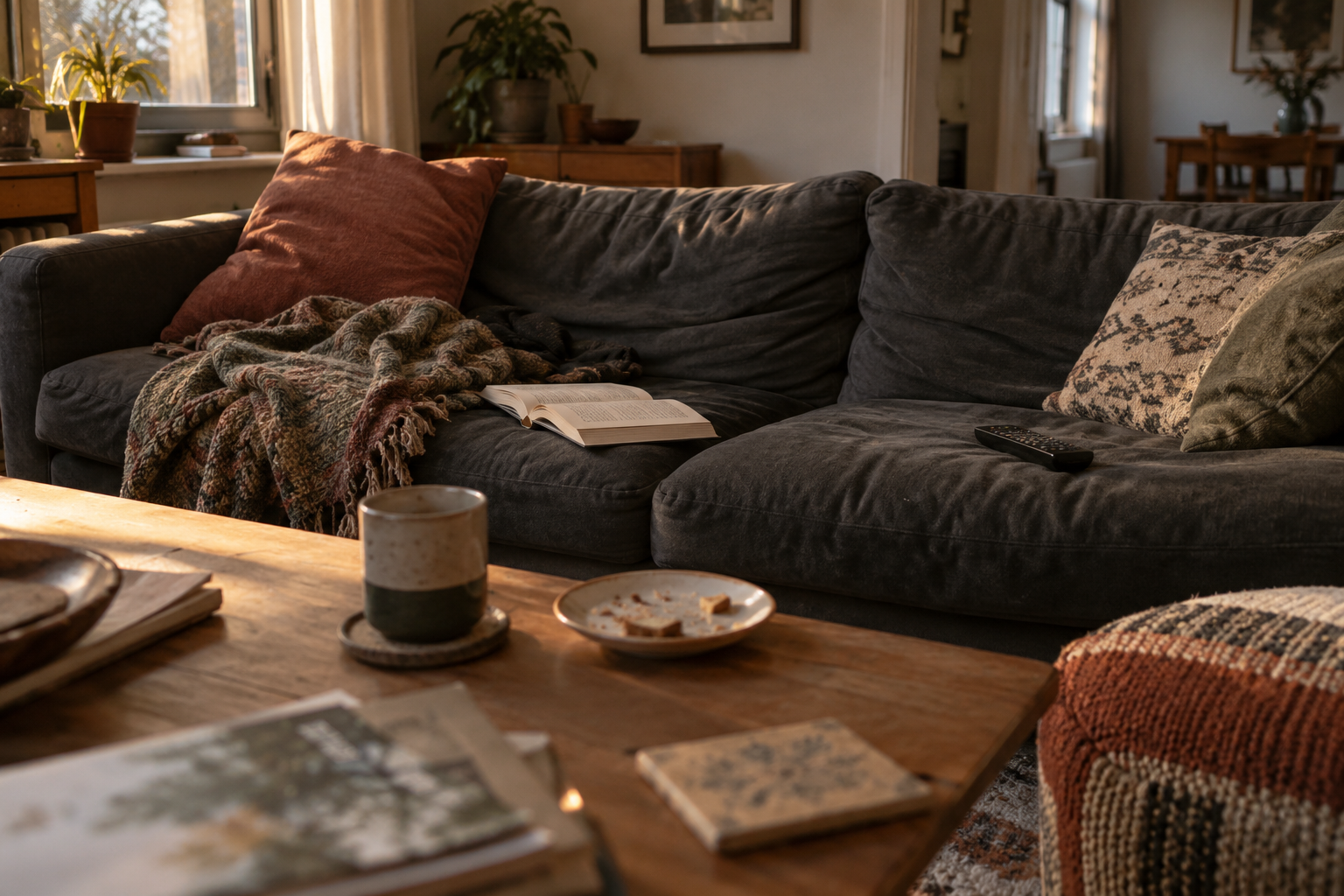
Stay in your pyjamas. Watch four films. Eat toast at 3pm. Spend an irresponsible amount of time reading about a celebrity scandal involving people you’d never heard of yesterday. Fall asleep on the sofa. Order dinner.
Don’t call it self-care.
Don’t make a gratitude list.
Don’t use the day to “reset for the week ahead.”
Waste it.
People in relationships do this all the time without anyone suggesting they need to learn how to embrace their own company.
A full life doesn’t require every available hour to be full.
Sometimes Sunday evening arrives and you haven’t made a memory, expanded your social circle, improved yourself or discovered an exciting new passion.
You just had a weekend.
That’s allowed too.
Sources / Further Reading
Cleary, M., Le Lagadec, D., Thapa, D. K. & Kornhaber, R. (2025). “Exploring the Impact of Hobbies on Mental Health and Well-Being.” Issues in Mental Health Nursing.
https://pubmed.ncbi.nlm.nih.gov/40489730/
Nichol, B. et al. (2024). “Exploring the Effects of Volunteering on the Social, Mental, and Physical Health and Well-being of Volunteers: An Umbrella Review.” VOLUNTAS: International Journal of Voluntary and Nonprofit Organizations.
https://link.springer.com/article/10.1007/s11266-023-00573-z